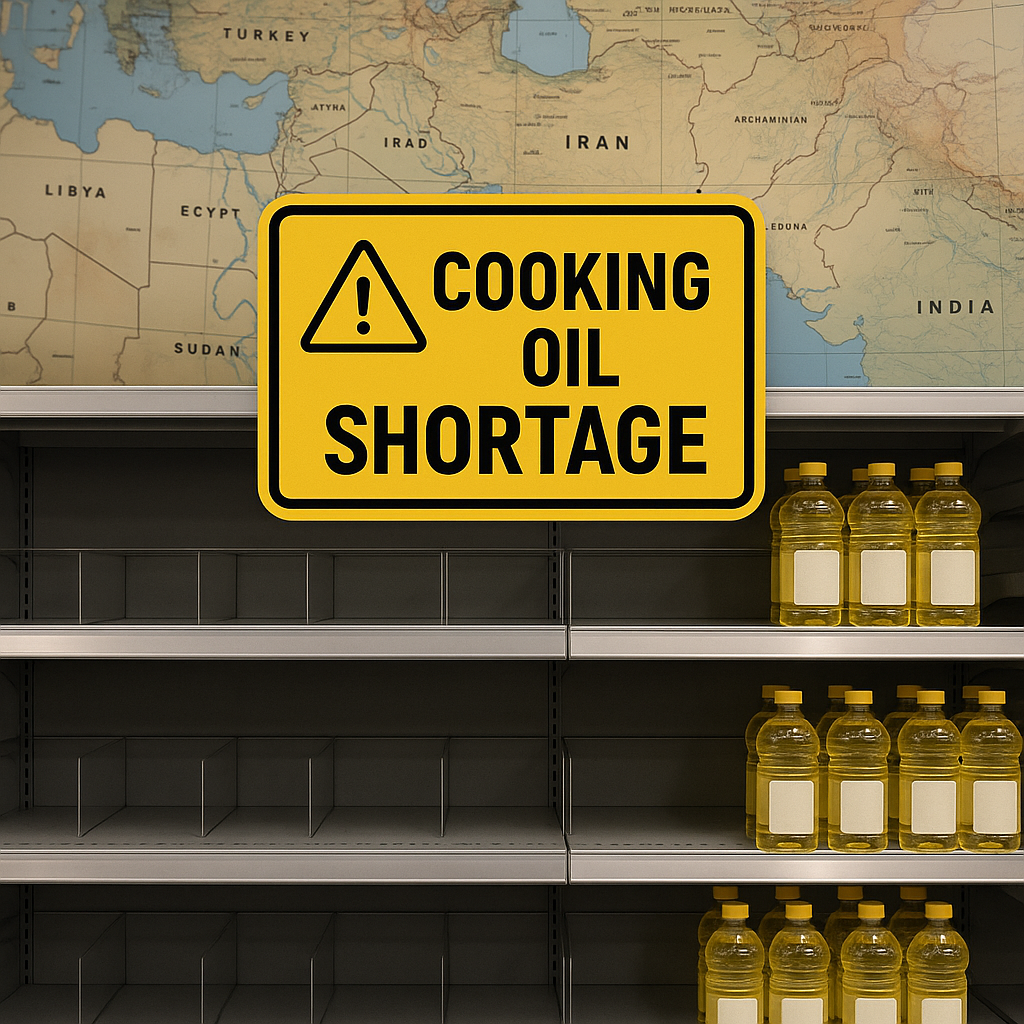

Introduction: The Unforeseen Link Between Geopolitics and Your Kitchen
In our interconnected world, events happening thousands of miles away can directly impact our daily lives. You might not immediately connect the dots between geopolitical tensions in the Middle East and your kitchen pantry, but the truth is, they're more closely linked than you think. Recent escalations in the Iran-Israel conflict, a long-standing and complex situation, have the potential to send ripples across global markets, particularly affecting the supply and price of crude oil. And when crude oil prices fluctuate, it can have surprising consequences for everyday essentials, including the cooking oil you use for your meals.
This isn't about fear-mongering; it's about being informed. In this blog post, we'll break down the basics of the Iran-Israel conflict, explain how it could disrupt the flow of oil worldwide, and most importantly, show you how this might lead to cooking oil shortages and price hikes in as little as 30 days. We'll also provide practical, easy-to-understand steps you can take to prepare your household. Our aim is to help you navigate potential disruptions with confidence and ensure your kitchen remains well-stocked.
Section 1: Understanding the Iran-Israel Conflict – A Brief Overview
The relationship between Iran and Israel has been strained for decades, marked by deep ideological differences, regional power struggles, and proxy conflicts. While the full history is complex, here's a simplified look at the key elements:
Roots of the Rivalry
At its core, the conflict involves a struggle for influence in the Middle East. Iran, a Shiite Muslim-majority nation, and Israel, a Jewish state, view each other as existential threats. Iran supports various non-state actors, like Hezbollah in Lebanon and Hamas in Gaza, which are considered hostile to Israel. Israel, in turn, has consistently worked to counter Iranian influence and its nuclear ambitions, viewing a nuclear-armed Iran as an unacceptable danger.
Recent Escalations and Their Significance
In recent times, the conflict has moved beyond proxy battles to more direct, albeit often covert, confrontations. This has included cyberattacks, maritime incidents, and missile exchanges. The current escalation has seen direct military actions, such as Israel reportedly targeting Iranian nuclear facilities and Iran retaliating with drone and missile strikes. While a ceasefire has recently been announced, tensions remain extremely high, and the possibility of further escalation or a breakdown of the ceasefire is a constant concern.
Why it Matters to Global Oil
The Middle East is the world's primary source of crude oil. Iran itself is a significant oil producer, and critically, it borders the Strait of Hormuz. This narrow waterway is a crucial chokepoint, through which roughly one-third of the world's seaborne oil passes daily. Any significant disruption or threat to shipping in the Strait of Hormuz, whether intentional or accidental, can trigger immediate panic in global oil markets. Even the threat of disruption can cause oil prices to spike, as traders and nations react to the possibility of reduced supply. While a ceasefire is in place, the underlying tensions mean that the risk of future supply chain shocks from this region remains.
Section 2: The Domino Effect – From Crude Oil to Your Cooking Oil
You might be wondering, "What does crude oil have to do with cooking oil?" It's a valid question, and the answer lies in the intricate web of global supply chains and the ripple effect of energy costs.
How Global Oil Markets Are Affected
When tensions in the Middle East escalate, even without direct attacks on oil infrastructure, the mere perceived risk can lead to:
- Price Hikes: Speculation and fear drive up the price of crude oil. Traders anticipate potential supply shortages, bidding up prices in anticipation. This is a common reaction to geopolitical instability in oil-producing regions.
- Supply Chain Jitters: Shipping companies may become hesitant to send vessels through high-risk areas, leading to delays and increased insurance costs. This can slow down the transportation of oil and other goods.
- Increased Production Costs: Higher crude oil prices translate to higher fuel costs for transportation across all industries. This means it costs more to move raw materials, process them, and deliver finished products to stores.
The Link to Cooking Oil Availability
Cooking oils, while derived from agricultural products like palm, soybean, sunflower, and rapeseed, are heavily influenced by global energy markets in several ways:
- Transportation Costs: Producing and distributing cooking oil requires a lot of energy. From harvesting crops to refining the oil and transporting it to shelves, every step involves fuel. When crude oil prices go up, so do these transportation and production costs. This directly impacts the final price you pay for a bottle of cooking oil.
- Manufacturing and Processing: The machinery used in processing plants, from crushers to refiners, runs on energy. Higher energy costs mean higher manufacturing costs for cooking oil producers.
- Alternative Fuels: Some edible oils, like palm oil and soybean oil, can also be used in the production of biofuels. If crude oil prices rise significantly, the demand for these agricultural oils as alternative fuels could increase, diverting them away from the food market and putting further pressure on edible oil supplies.
- Fragile Supply Chains: Global cooking oil supply chains are already facing vulnerabilities due to factors like climate change impacting crop yields and evolving trade policies. A major geopolitical shock layered on top of these existing challenges can quickly create shortages. For instance, countries heavily reliant on imports from regions affected by increased shipping costs or diversion of resources could see supplies dwindle rapidly.
The 30-Day Outlook: What to Expect
Given the immediate impact of global oil price fluctuations and the lead time for shipping and distribution, consumers could start to feel the effects on cooking oil availability and price within 30 days. You might see:
- Empty Shelves: Initial panic buying, coupled with delayed shipments and reduced production due to higher costs, could lead to empty shelves in supermarkets.
- Significant Price Increases: Even if supplies remain somewhat stable, the increased costs of production and transport will almost certainly be passed on to consumers, leading to noticeable price hikes.
- Limited Varieties: Certain types of cooking oil, especially those heavily reliant on specific import routes or that have higher demand for biofuel production, might become scarcer than others.
Section 3: Practical Steps for Consumers – What You Can Do
While the idea of disruptions can be unsettling, there are practical steps you can take to minimize the impact on your household. Being prepared is key.
Assess Your Current Needs and Stock
- Check Your Pantry: Take stock of the cooking oil you currently have. How much do you use in a typical month?
- Consider Your Usage: Are you a heavy fryer, or do you mostly use oil for light sautéing and baking? This will help you determine how much you realistically need.
- Shelf Life Awareness: Most cooking oils have a shelf life of about 1-2 years unopened, and less once opened. Don't overstock beyond what you can reasonably use before it goes bad.
Smart Buying Strategies
- Buy in Moderation: Avoid panic buying large quantities. This only exacerbates shortages for everyone. Instead, consider buying an extra bottle or two more than usual, ensuring you have a small buffer.
- Look for Sales: If prices haven't spiked yet, take advantage of any current sales to gradually build a small reserve.
- Explore Different Brands/Sizes: If your usual brand or size isn't available, be open to trying others. Sometimes larger containers offer better value.
Conserving and Extending Your Cooking Oil
- Filter Used Oil (for frying): If you deep-fry, consider filtering your oil after each use to remove food particles. This can extend its life for a few more uses, provided it hasn't reached its smoke point or developed an off-odor.
- Proper Storage: Store cooking oil in a cool, dark place away from direct sunlight and heat. This prevents it from going rancid quickly. Opaque containers are better than clear ones.
- Mindful Usage: Measure oil rather than pouring freely. Use non-stick pans to reduce the amount of oil needed.
- Alternative Cooking Methods: Explore cooking methods that require less oil, such as baking, steaming, grilling, or air frying.
Exploring Alternative Fats and Oils
While not always a direct substitute for liquid cooking oil, having some alternatives on hand can be useful:
- Solid Fats:
- Butter/Ghee: Can be used for sautéing and baking. Ghee (clarified butter) has a higher smoke point.
- Coconut Oil: Solid at room temperature, it's great for baking and some pan-frying. Virgin coconut oil has a distinct flavor, while refined is more neutral.
- Lard/Tallow: Traditional animal fats that can be excellent for frying and baking, and have a good shelf life.
- Vegetable Shortening: A stable fat with a long shelf life, suitable for baking and frying.
- Other Liquid Oils (if available):
- Olive Oil: A versatile oil, especially extra virgin for dressings and lower-heat cooking, and regular/light olive oil for higher heat.
- Avocado Oil: Has a very high smoke point, making it suitable for almost all cooking methods.
- Peanut Oil: Good for high-heat cooking and frying due to its high smoke point and neutral flavor.
- Sesame Oil: Often used as a finishing oil for flavor, rather than for primary cooking, due to its low smoke point.
Remember to consider the smoke point and flavor profile of any alternative when deciding how to use it.
Conclusion: Staying Prepared in Uncertain Times
The Iran-Israel conflict, a situation with deep historical roots and ongoing complexities, serves as a stark reminder of how global geopolitics can directly influence the most mundane aspects of our daily lives – even down to the cooking oil in our kitchens. While a ceasefire offers a temporary reprieve, the underlying tensions and the strategic importance of the Middle East to global oil supplies mean that the risk of future disruptions remains.
By understanding the potential for ripple effects on crude oil markets and, consequently, on the availability and price of cooking oil, you can take proactive steps to prepare. Assessing your needs, adopting smart buying habits, conserving what you have, and exploring alternative fats are all practical strategies to navigate these uncertain times. Staying informed, not alarmed, is your best approach. By being mindful and prepared, you can ensure your kitchen remains well-equipped, no matter what global events unfold.